SIMONE CR · CPA · NLP · TEDX
You Have the Skills.
You Have the Experience.
Something Is Still Costing You.
Private coaching and keynote speaking for leaders ready to close the gap — through presence, communication that moves rooms, and sales as influence.
That gap isn't a skills problem. It's a patterns problem. That's where we work.
The gap between where you are
and what you're capable of
isn't a skills problem.
Most leadership coaches work on how you lead. Most communication coaches work on what you say. Neither one works on what's running underneath both.
The pattern underneath your ceiling — in your leadership, your communication, your sales — is rarely visible from the inside.
But it shows up in every high-stakes room. Every conversation that should have gone differently. Every result that doesn't match the effort you put in.
That's what we address here. Directly. Specifically. With measurable results.
WHO THIS IS FOR
For leaders who are done leaving their potential in the room.
You've been the most capable person in the room for so long it's become its own kind of trap.
You lead teams, close deals, and present to rooms full of people who need to believe in what you're saying. By most measures, it's working. And you still feel the gap — in how you show up when the stakes are highest, in the sales conversation that should feel easier by now, in the space between what you know and what the room actually receives.
That's not a knowledge gap. It's a patterns gap.
Patterns change through specific, focused work — not through another framework or another book. This is that work. Private. Precise. Built around you.
Executive Morning Practice • Free Download
Your Morning Is Running Your Business.
Most high-achievers start the day in reaction mode — and spend the rest of it making decisions from stress, not clarity. This free 10-minute practice interrupts that pattern before the inbox does.
ABOUT SIMONE
Twenty years inside the financials and leadership of businesses across thirty countries taught me one thing.
Twenty years inside the financials and leadership of businesses across thirty countries taught me one thing: the ceiling is never where people think it is.
Nike. PwC. Fox. Fortune 500 boardrooms and founder-led businesses finding their footing. I've sat across from brilliant leaders at every level — and watched the same pattern play out regardless of title, tenure, or track record.
The gap between what they were capable of and how they were actually showing up was almost never a skills problem. It was something quieter. Running underneath the leadership. Underneath the communication. Quietly costing them in every room that mattered.
I'm a CPA. I'm also NLP and Breathwork certified, with years of study in behavioral and somatic science — the forces that run every leadership decision, every communication breakdown, every sales result that doesn't match the effort.
The data and the body have always been connected. The best leaders have always known it. Most are just never taught how to work with both at once.
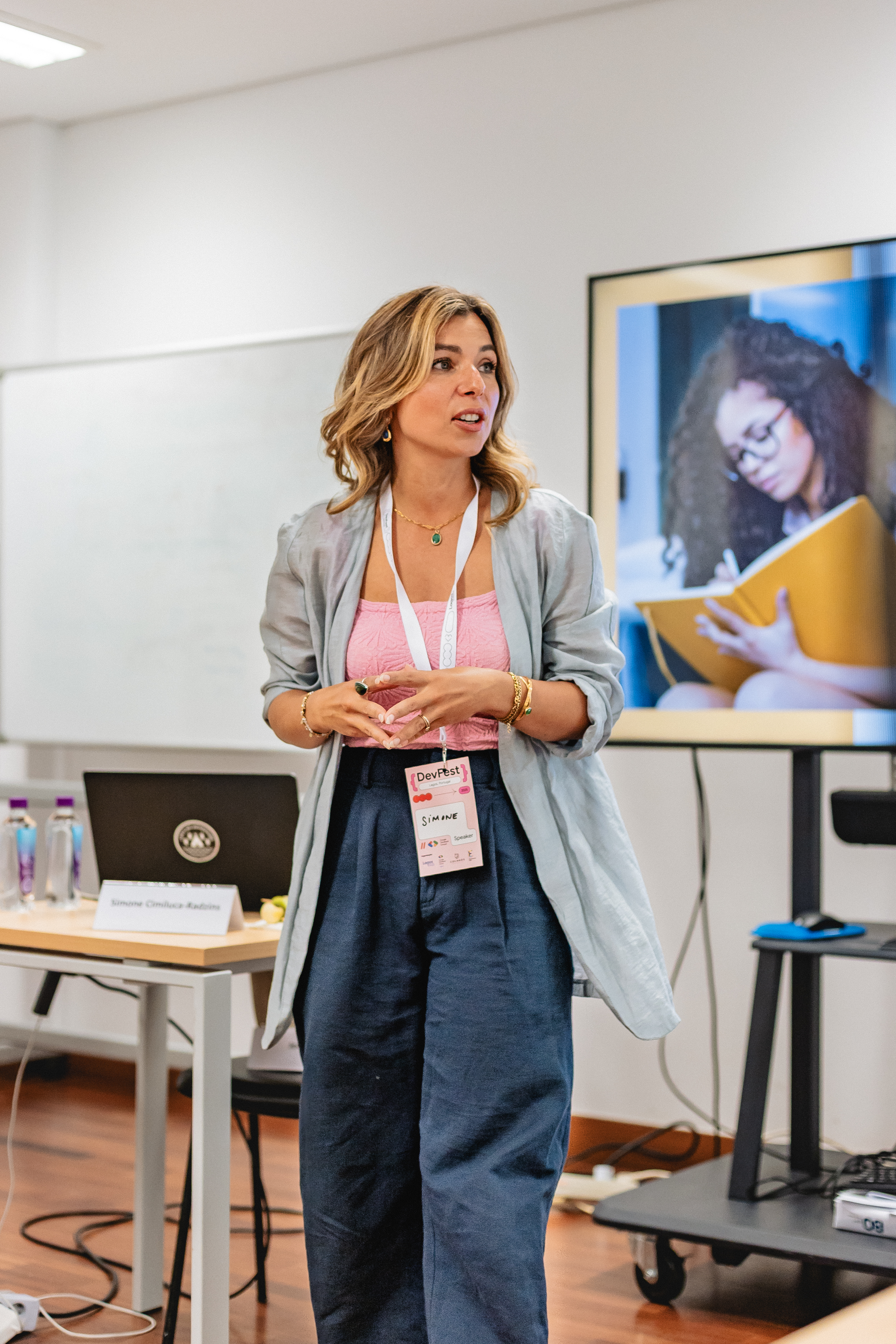
I organize TEDx events. I host a weekly podcast. I work with a small number of executives and leaders each quarter — privately, precisely, at this specific intersection. Based in Lisbon, Portugal. Working globally.
- ✶Certified Public Accountant — nearly 20 years
- ✶NLP Certified & Breathwork Certified
- ✶Fortune 500 — PwC, Fox, Nike, Capgemini
- ✶30+ countries · hundreds of businesses
- ✶Featured in Grazia · Entrepreneur.com · NPR
- ✶TEDx event organizer
- ✶Host — The Nervous System of Money
- ✶Based in Lisbon, Portugal · Working globally
Freedom Sun is Simone's platform for women building businesses that run without them — the nervous system work and the business systems together in one place.
Explore Freedom Sun →WHAT LEADERS SAY
Real work.
Real shifts.
“
Every conversation with Simone leaves you feeling inspired and equipped with a clearer roadmap to success. Her enthusiasm is contagious. Meeting her has been a game-changer. She embodies the perfect blend of intelligence, kindness, and professionalism.
Sofia · Founder, Sofia 7 Oficios
“
Simone helped me look at my services from a completely different perspective — allowing me to apply my expertise into fields where I never saw opportunity before. The shift was immediate and real.
Liliana · Consultant
“
Simone helped me work through a critical decision, reflecting on both financial and life direction goals. She encouraged me to look at my inner values alongside the numbers. Her wisdom is an asset to anyone taking a new direction.
Kate · CEO, Arco Preloved
Business & Leadership
Insights
THE PODCAST
The Nervous System of Money
For leaders who are done pretending performance is just a strategy problem. Every week — financial intelligence, human patterns, and the truth about what your ceiling is actually made of. Real conversations. No generic advice.
THE BLOG
Reactive vs. Proactive Leadership
Reactive leadership is costing you more than you think. Learn the nervous system science behind your decisions and how to shift your default state. ...more
Communication
March 25, 2026•10 min read

Choose your entry point
How I can support you and your team.
Whether you're ready for private coaching, want to bring a workshop to your team, or need a talk that genuinely shifts something in the room — here's where to start.
01
Business Coaching
You're scaling. The next level requires a different version of you — not just better systems. If you're ready to work on the leadership, communication, and sales patterns that are quietly running the business, this is where we start.
02
Workshops & Events
For executive teams and organizations ready to move from knowing to actually doing.
Communication — Say Less. Land More. Most communication breakdowns aren't about what you said — they're about what the other person heard. This training rewires how you present, persuade, and lead conversations so your message lands. Whether you're pitching investors, managing a team, or taking a stage — clarity is your competitive edge.
AI for Business — Use It Before It Uses You. The professionals winning with AI right now aren't the most technical. They're the most intentional. This workshop shows founders and executives how to integrate AI into operations, content, and decision-making without losing their voice, their edge, or their team.
Sales — Sell Like You Mean It. The best salespeople don't push. They create certainty. This training combines financial strategy, communication psychology, and nervous system science to help you close with confidence — no manipulation, no scripts, just a system built on trust.
03
Keynote Speaking
A talk built to shift something in the room permanently. Every keynote sits at the intersection of financial intelligence and human performance.
Signature talks:
— The Nervous System of Money — why your relationship with money is running your leadership
— The Communication Gap — what's really happening when rooms don't respond the way you expect
— Sales as Influence — the shift from performance to presence that changes everything
THE NEWSLETTER
Your ceiling has a name.
Every week we find it.
Not tips. Not hustle content. One clear insight per week on what's actually running your leadership, your communication, and your revenue — and what to do about it. Read in under five minutes.
No spam. Unsubscribe anytime. Read by leaders in 30+ countries.