Most American entrepreneurs underestimate how deeply their financial perceptions can shape business outcomes. Nearly 29% of Americans struggle with money dysmorphia, leading to unnecessary anxiety and missed business opportunities. This problem runs deeper than financial stress alone, affecting major decisions and personal well-being. Understanding the core ideas behind money dysmorphia and how it distorts financial reality is the first step toward reclaiming control and building lasting financial confidence.
Table of Contents
- Defining Money Dysmorphia and Its Core Concepts
- Common Types and Root Causes in Entrepreneurship
- Recognizing Signs and Behavioral Patterns
- Impact of Money Dysmorphia on Business Success
- Effective Strategies to Reframe Your Money Mindset
- Common Pitfalls and Sustainable Growth Practices
Key Takeaways
| Point | Details |
|---|---|
| Understanding Money Dysmorphia | This psychological phenomenon reflects a disconnect between one’s financial reality and perception, leading to anxiety and unhealthy financial behaviors. |
| Impact on Entrepreneurs | Nearly 29% of Americans struggle with distorted financial views, affecting decision-making and growth opportunities in business. |
| Recognizing Behavioral Patterns | Key warning signs include persistent financial anxiety, constant comparisons with others, and reluctance to invest. |
| Transformative Strategies | Establishing realistic financial goals and practicing transparency are crucial for reframing mindsets and fostering healthier financial habits. |
Defining Money Dysmorphia and Its Core Concepts
Money dysmorphia is a complex psychological phenomenon where individuals experience a profound disconnect between their actual financial reality and their perception of money. Unlike typical financial stress, this condition represents a deeper, more intrinsic distortion of financial self-understanding. Money dysmorphia emerges when someone’s perspective on finances doesn’t match their financial reality, creating significant emotional and behavioral challenges.
At its core, money dysmorphia functions similarly to body dysmorphia, where individuals obsessively perceive financial flaws or scarcity that may not objectively exist. People with this condition often experience intense anxiety, experiencing persistent feelings that they never have enough money, regardless of their actual financial standing. This psychological pattern can manifest through several distinctive behaviors:
- Constant financial worry despite stable income
- Irrational fear of economic collapse
- Excessive saving or conversely, compulsive spending
- Extreme anxiety about future financial scenarios
Recognizing money dysmorphia requires understanding its nuanced psychological roots. It’s not simply about being frugal or financially conservative, but represents a deeper emotional response rooted in past experiences, childhood financial narratives, and complex psychological mechanisms that distort one’s relationship with money. By identifying these patterns, individuals can begin the critical journey of reframing their financial mindset and developing healthier, more balanced perspectives on personal economics.
Common Types and Root Causes in Entrepreneurship
Money dysmorphia presents uniquely complex challenges for entrepreneurs, who often experience heightened financial pressures and psychological stress. Nearly 29% of Americans report experiencing a distorted view of their financial situation, frequently triggered by social media comparisons and perceived economic inadequacies. For business owners, these distortions can significantly impact decision-making, investment strategies, and overall financial health.
Entrepreneurs typically encounter two primary manifestations of money dysmorphia: scarcity mindset and illusory abundance. Money dysmorphia can manifest in contrasting ways, from individuals with substantial savings who still believe they lack sufficient funds to those who consistently overspend while denying their financial distress. These psychological patterns create profound barriers to sustainable business growth:
Scarcity Mindset Entrepreneurs
- Constantly fear financial collapse
- Undervalue their services
- Resist necessary business investments
- Experience persistent anxiety about revenue
Illusory Abundance Entrepreneurs
- Overestimate potential earnings
- Make impulsive financial decisions
- Ignore warning signs of financial instability
- Engage in high-risk business strategies
The root causes of entrepreneurial money dysmorphia are multifaceted, often stemming from personal history, societal conditioning, and psychological programming. Past financial traumas, childhood experiences with money, and societal pressures contribute to these distorted perceptions. [Developing a healthy “money mindset” becomes crucial for entrepreneurs seeking to break free from these self-limiting patterns and create sustainable, financially resilient businesses.
Recognizing Signs and Behavioral Patterns
Money dysmorphia manifests through subtle yet profound psychological patterns that can silently undermine financial well-being. The disconnect between someone’s financial reality and perception of wealth can trigger unhealthy spending habits and excessive anxiety around finances. Understanding these signs becomes crucial for entrepreneurs seeking to maintain psychological and financial balance.

Recognizing money dysmorphia requires keen self-awareness and the ability to identify nuanced behavioral indicators. Researchers have extensively studied the objective-subjective wealth relationship, noting that anxiety plays a critical role in explaining why financial perceptions and practices often fail to correlate. These behavioral patterns can significantly impact personal and professional outcomes:
Key Warning Signs:
- Persistent financial anxiety despite stable income
- Constant comparison of personal finances to others
- Difficulty celebrating financial achievements
- Extreme reluctance to invest in personal or business growth
- Irrational fear of financial scarcity
The psychological ramifications of untreated money dysmorphia extend beyond financial stress. Developing a robust “[money mindset” becomes essential for entrepreneurs to break free from these self-limiting patterns and create sustainable, emotionally healthy financial practices. By recognizing these signs early, individuals can take proactive steps to reframe their relationship with money and prevent long-term psychological and economic challenges.
Impact of Money Dysmorphia on Business Success
Money dysmorphia can devastate entrepreneurial potential by creating invisible barriers that prevent strategic financial growth and decision-making. Many entrepreneurs mistakenly believe they are not wealthy enough to make critical financial plans, which leads to avoiding essential investments in estate planning, business development, and personal growth. This psychological blockade transforms potential opportunities into missed connections and stalled business momentum.
The impact of money dysmorphia extends far beyond simple financial hesitation. Entrepreneurs suffering from this condition often experience profound psychological constraints that directly undermine business success. These limitations manifest through multiple destructive patterns:
- Consistently undervaluing personal and professional worth
- Refusing to invest in critical business infrastructure
- Avoiding necessary financial risk-taking
- Sabotaging potential revenue streams
- Maintaining a scarcity mindset that repels abundance
When entrepreneurs prioritize money accumulation over personal and professional comfort, they create a self-defeating cycle that prevents genuine financial and strategic expansion. [Developing a strategic “money mindset” becomes crucial for breaking these destructive patterns and unlocking true entrepreneurial potential. By recognizing and addressing these psychological barriers, business owners can transform their financial narrative from limitation to opportunity.
Effective Strategies to Reframe Your Money Mindset
Money mindset transformation requires intentional, strategic approaches that challenge deep-rooted financial beliefs and behavioral patterns. Establishing realistic financial goals and breaking down long-term objectives into smaller, achievable steps can help individuals build confidence and resilience in their financial journey. This process demands consistent self-reflection and a willingness to confront uncomfortable financial narratives.
Developing a comprehensive budget serves as a powerful tool for reframing financial perspectives, providing structure and intentionality to spending and saving habits. Effective money mindset strategies encompass several critical dimensions:
Key Reframing Techniques:
- Conduct regular financial self-assessments
- Practice radical financial transparency
- Challenge negative money narratives
- Develop abundance-oriented thinking
- Create measurable financial goals
Common Pitfalls and Sustainable Growth Practices
Financial sustainability demands a nuanced understanding of how psychological patterns can derail entrepreneurial success. Money dysmorphia creates profound distortions where individuals develop unhealthy behaviors and attitudes toward money, often leading to anxiety, depression, and financial instability. Recognizing these patterns becomes the first critical step in developing resilient financial strategies.
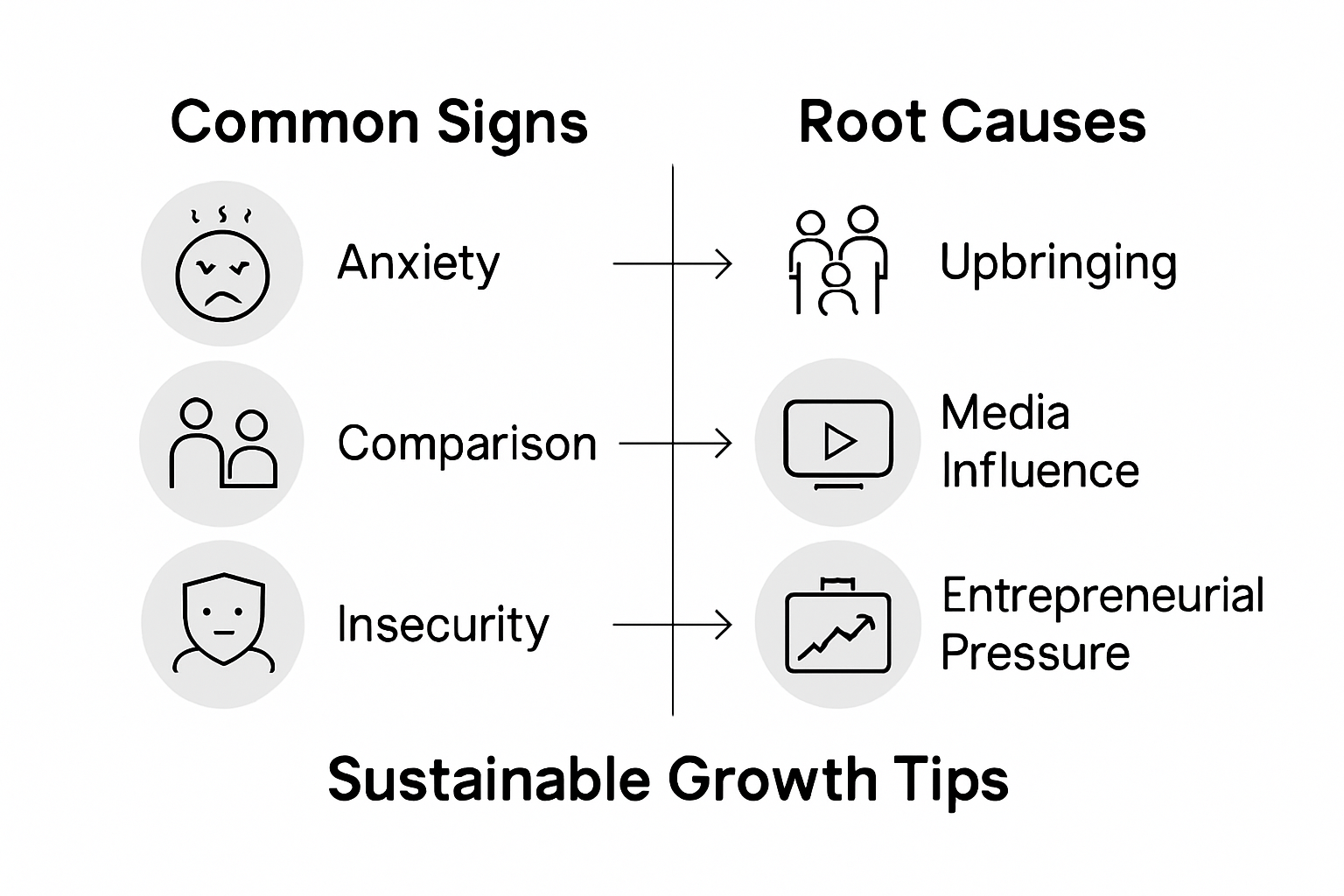
Entrepreneurs frequently experience financial anxiety that doesn’t match their actual economic reality, causing unnecessary stress and strategic paralysis. These psychological barriers manifest through predictable yet destructive patterns:
Common Growth Impediments:
- Chronic undervaluing of personal and professional worth
- Paralyzing fear of financial risk
- Inconsistent revenue generation strategies
- Reactive instead of proactive financial planning
- Self-sabotaging money management behaviors
Break Free from Money Dysmorphia and Unlock Your True Financial Potential
Struggling with a distorted view of your financial reality can create unseen barriers that hold your business back. Money dysmorphia causes persistent anxiety and confusion about money, even when your finances are stable. This hidden mindset issue stops many entrepreneurs from investing wisely, valuing their work, and making confident decisions. If you recognize these patterns in yourself, it is time to address the root causes and shift your perspective.
At Simone CR, we specialize in helping entrepreneurs like you transform their money mindset through inner work combined with practical business strategies. Our community and coaching focus on building sustainable success without burnout by confronting limiting beliefs and creating empowered financial habits. Don’t let money dysmorphia stall your growth. Take the first step toward true financial clarity and business confidence today by joining the Freedom Club. Reclaim control over your money story and unlock your full entrepreneurial potential now.
Frequently Asked Questions
What is money dysmorphia?
Money dysmorphia is a psychological condition where individuals perceive their financial situation inaccurately, often leading to anxiety and unhealthy financial behaviors. It represents a profound disconnect between one’s actual financial reality and their perception of money.
How does money dysmorphia affect entrepreneurs?
Money dysmorphia can create significant barriers for entrepreneurs, resulting in a scarcity mindset or illusory abundance. This may lead to poor decision-making, avoidance of key investments, and ultimately hinder business growth and financial stability.
What are the common signs of money dysmorphia?
Key signs of money dysmorphia include persistent financial anxiety despite a stable income, constant comparison of finances to others, difficulty celebrating financial successes, and extreme reluctance to invest in personal or business growth.
How can individuals reframe their money mindset?
To reframe a money mindset, individuals can establish realistic financial goals, conduct regular self-assessments, practice financial transparency, challenge negative money narratives, and develop abundance-oriented thinking to shift away from a scarcity mindset.
Recommended
- Master Money Mindset Workflow for Lasting Success – Simone CR
- How to Change Your Money Mindset for Business Growth
- Money Mindset: Complete Guide to Why Develop One – Simone CR
- Money Mindset: Transform Beliefs to Boost Business Success
- How Finances can Impact Your Mental Health – Dr. Stephen Oreski & Associates
- Effective Financial Stress Management for a Secure Future – Finblog