Over half of American entrepreneurs report feeling uncertain about their financial future. Without a clear view of where your money is coming from and where it is going, even the most promising business ideas can stall. By learning practical steps to track income, manage expenses, and set realistic goals, you can build a solid financial foundation that supports your business growth and reduces stress.
Table of Contents
- Step 1: Assess Your Current Financial Situation
- Step 2: Clarify Your Income and Revenue Streams
- Step 3: Organize and Track Business Expenses
- Step 4: Set Clear Financial Goals and Milestones
- Step 5: Review and Adjust Your Financial Plan Regularly
Quick Summary
| Key Insight | Explanation |
|---|---|
| 1. Assess Financial Situation | Gather key financial documents to understand your current financial health and identify inefficiencies. |
| 2. Clarify Income Sources | Categorize revenue streams to evaluate stability and develop intentional financial strategies. |
| 3. Organize Expenses | Implement an expense tracking system to identify spending patterns and opportunities for cost reduction. |
| 4. Set Financial Goals | Establish specific, measurable financial objectives to guide your business strategy. |
| 5. Regular Financial Reviews | Schedule quarterly reviews to adapt strategies based on market conditions and performance metrics. |
Step 1: Assess Your Current Financial Situation
Gaining clarity about your financial landscape starts with a transparent snapshot of where you are right now. Understanding your current financial health will help you build a roadmap for strategic growth and smarter business decisions.
To kickstart this process, gather all your key financial documents including bank statements, tax returns, profit and loss statements, and balance sheets. Professional entrepreneurs recognize that regularly reviewing personal and business finances helps identify potential overspending and inefficiencies. Start by creating a comprehensive spreadsheet that breaks down your income streams, monthly expenses, outstanding debts, and existing assets.
One critical action is separating your personal and business accounts. This practice not only simplifies tax planning but also provides clearer visibility into your business financial performance. Track your cash flow meticulously by documenting every income and expense. Pro tip: Use accounting software or work with a financial professional who can help you create a systematic tracking method that gives you real time insights into your financial health.
As you compile this information, look for patterns. Are there recurring expenses that can be reduced? Are your income streams stable or inconsistent? Identifying these elements will set the foundation for more strategic financial planning in the upcoming steps of your entrepreneurial journey.
Step 2: Clarify Your Income and Revenue Streams
In this crucial stage of financial clarity, you will transform your income tracking from guesswork to precision. Your goal is to create a comprehensive understanding of every dollar flowing into your business, identifying not just how much you earn, but from where and how consistently.

Start by categorizing all your current revenue sources. This means breaking down income streams into detailed segments such as service fees, product sales, consulting work, digital products, or recurring subscriptions. Entrepreneurs can leverage strategic money mindset techniques to optimize their income tracking and develop a more intentional financial approach. Create a spreadsheet that logs each income stream with precise details including the source, frequency, average monthly amount, and potential growth trajectory.
Review your income streams critically. Which sources are most stable? Which are seasonal or unpredictable? Understanding these patterns helps you make strategic decisions about future business development, pricing strategies, and potential diversification. Calculate your average monthly income by using data from the past 6 to 12 months to get a realistic picture. Pro tip: Always maintain a conservative estimate and create buffer zones in your financial planning to account for potential fluctuations in revenue.
By mapping out your income streams with this level of detail, you transform financial uncertainty into strategic insight. This clarity will become your roadmap for sustainable business growth and confident financial management.
Step 3: Organize and Track Business Expenses
Tracking business expenses is your financial GPS for sustainable growth. In this critical stage, you will transform chaotic spending into a strategic system that provides crystal clear insights into your business financial health.
Regularly reviewing business finances helps entrepreneurs identify potential overspending and inefficiencies while maintaining tax planning accuracy. Begin by creating a comprehensive expense tracking system that categorizes every business expenditure. Separate your expenses into clear categories such as operational costs, marketing investments, technology subscriptions, professional development, travel, and equipment purchases. Use digital tools or spreadsheets to log each expense with precise details including date, vendor, amount, payment method, and specific category.
Maintain meticulous documentation by keeping digital copies of all receipts and invoices. Develop a consistent monthly review process where you analyze your spending patterns, looking for opportunities to reduce unnecessary costs. Pro tip: Set up separate bank accounts for business and personal expenses to simplify tracking and provide a clear financial snapshot. Aim to reconcile your expenses weekly to stay ahead of potential financial discrepancies and maintain real time awareness of your business spending.
By implementing a robust expense tracking system, you transform financial management from a reactive task to a proactive strategy. This level of financial organization will become your foundation for confident business decision making and sustainable growth.
Step 4: Set Clear Financial Goals and Milestones
Setting clear financial goals transforms your business from a wandering venture to a purposeful enterprise. In this crucial stage, you will craft a strategic roadmap that turns your entrepreneurial vision into measurable, achievable financial targets.
Entrepreneurs can strengthen their overall financial health by identifying specific areas for improvement and setting precise financial goals. Begin by creating both short term and long term financial objectives. Short term goals might include increasing monthly revenue by 15 percent, reducing operational expenses by 10 percent, or establishing a consistent profit margin. Long term goals could involve scaling your business, developing passive income streams, or preparing for potential investment opportunities.
Make your financial goals specific, measurable, actionable, realistic, and time bound. This SMART framework ensures your objectives are not just wishful thinking but strategic targets. Break down each goal into quarterly and monthly milestones, creating a clear path of progression. Track your progress meticulously using financial dashboards or spreadsheets. Pro tip: Review and adjust your goals quarterly to remain adaptable to market changes and your business evolution. Consider potential obstacles and build contingency plans that allow flexibility without compromising your core financial objectives.
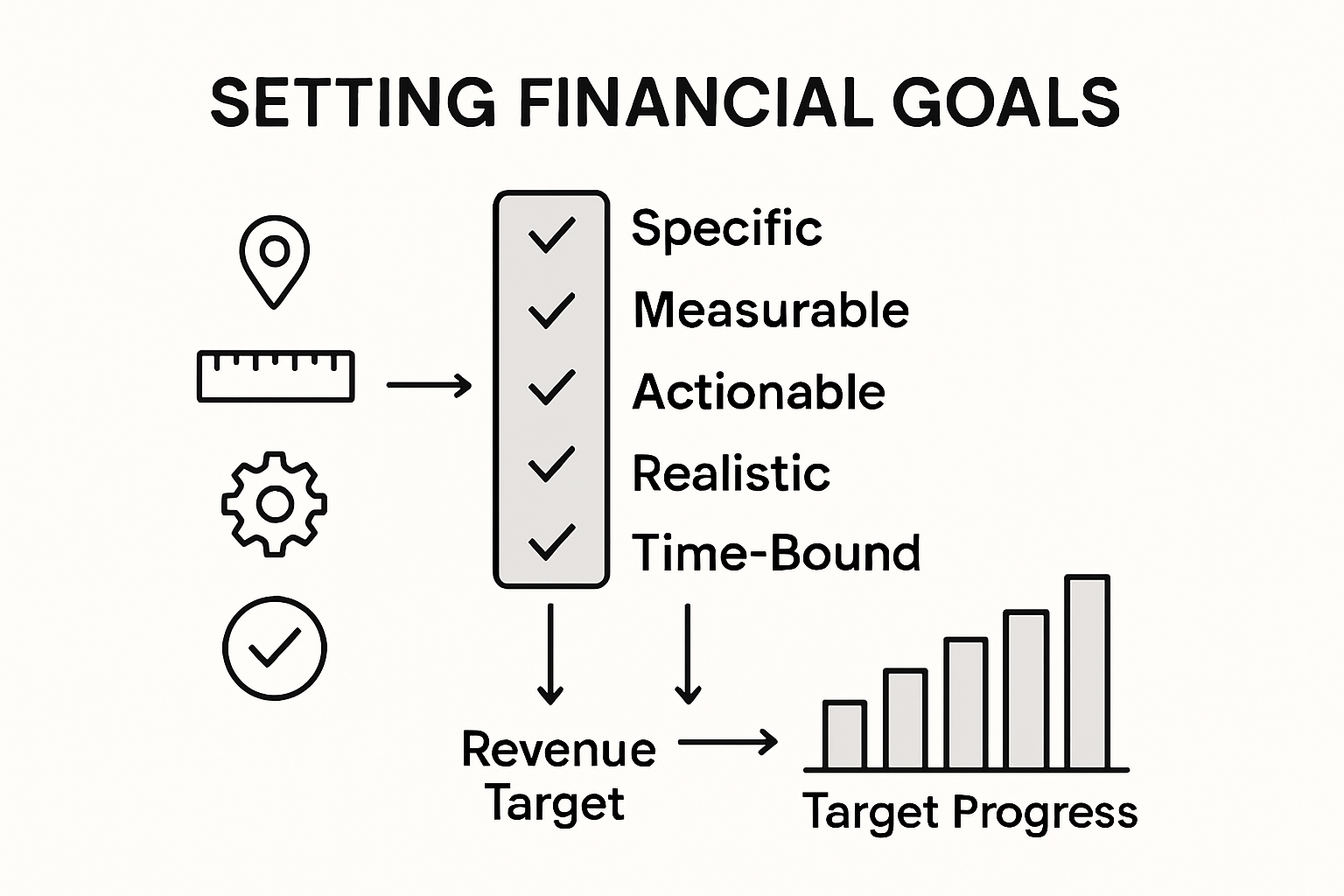
By establishing clear financial goals, you create a powerful navigation system for your business. These milestones will become your financial compass, guiding every strategic decision and helping you measure true progress beyond mere numbers.
Step 5: Review and Adjust Your Financial Plan Regularly
Regular financial review is the heartbeat of sustainable business growth. In this critical stage, you will transform your financial plan from a static document into a dynamic strategic tool that evolves with your entrepreneurial journey.
Entrepreneurs can significantly improve their financial health by consistently reviewing personal and business finances to identify potential overspending and inefficiencies. Schedule quarterly financial reviews where you critically analyze your balance sheets, profit and loss statements, cash flow reports, and progress toward your established financial goals. During these reviews, assess what strategies worked, which areas need improvement, and how external market conditions might require strategic adjustments.
Develop a systematic approach to your financial reviews. Create a standardized checklist that covers key financial metrics such as revenue trends, expense ratios, profit margins, debt levels, and investment performance. Pro tip: Use visualization tools like graphs and dashboards to make your financial data more digestible and easier to interpret. Be ruthlessly honest with yourself about financial performance, celebrating wins and addressing challenges with equal commitment. Remain flexible and willing to pivot your financial strategies when data suggests a different approach.
By treating your financial plan as a living document that requires consistent attention and refinement, you will build a resilient financial foundation that can withstand market fluctuations and support your long term business vision.
Find Financial Clarity and Build Your Confident Entrepreneurial Path
Are you struggling to gain a clear understanding of your business finances and feel overwhelmed by managing income streams and expenses? This guide highlights common challenges entrepreneurs face like tracking revenue precisely, organizing expenses strategically, and setting realistic financial goals that keep growth steady and sustainable. These pain points can lead to stress and uncertainty that hold you back from achieving your true potential.
At SimoneCR.com, we believe that true financial clarity comes from combining inner work with practical business strategies. Our holistic approach empowers you to not only master money management but also cultivate the self-leadership and confidence essential for long term success. If you are ready to transform confusion into control and doubt into decisive action then explore how joining the Freedom Club can provide personalized coaching, mindset tools, and strategic support tailored for entrepreneurs like you.
Take the next step now to stop second guessing your finances and start embracing a clear path forward. Discover resources that help you track, plan, and grow with confidence by visiting SimoneCR.com and unlock the proven methods to lead your business to sustainable success. Your journey toward financial empowerment begins today.
Frequently Asked Questions
How can I assess my current financial situation as an entrepreneur?
Assess your current financial situation by gathering all key financial documents such as bank statements, tax returns, and profit and loss statements. Create a comprehensive spreadsheet to categorize your income, expenses, debts, and assets to gain clarity about your financial health.
What steps should I take to clarify my income and revenue streams?
To clarify your income, categorize all revenue sources into detailed segments like service fees or product sales, and log this information in a spreadsheet. Review your income streams for stability and consistency to enhance your financial planning.
How do I track business expenses effectively?
Track business expenses by creating a detailed expense tracking system that categorizes each expenditure, using digital tools for logging. Reconcile your expenses weekly and set up separate bank accounts for personal and business expenses to maintain clear financial oversight.
What are some measurable financial goals I can set for my business?
Set specific financial goals such as increasing monthly revenue by 15% or reducing operational expenses by 10%. Break these goals into quarterly and monthly milestones to create a clear path for assessing progress over time.
How often should I review and adjust my financial plan?
Review your financial plan quarterly to analyze your performance against established goals and make necessary adjustments based on market conditions. Maintain a systematic approach by checking key financial metrics to ensure alignment with your business strategy.
What tools can I use to visualize my financial data?
Use visualization tools like graphs or dashboards to make your financial data more digestible. Implement these tools during your financial reviews to better interpret trends and enable informed decision-making.
Recommended
- Quickbooks Online Training with Simone CR, CPA
- How Can You Grow Your Business Holistically Step by Step
- Profit First: The CPA’s Blueprint to Never Worry About Cash Flow Again – Simone CR
- 7 Essential Money Mindset Tips for Entrepreneurs’ Success – Simone CR
- How to Set Business Goals for Measurable Growth Success – Projector Display